
The why Club: learning in the age of AI
A club for curious minds
Learning in
the age of AI.
Sharpen your mind.
Open your world.
Remember what matters. Put ideas to work. Then go deeper, see wider and imagine what comes next.
Three ways to learn. One curious mind.
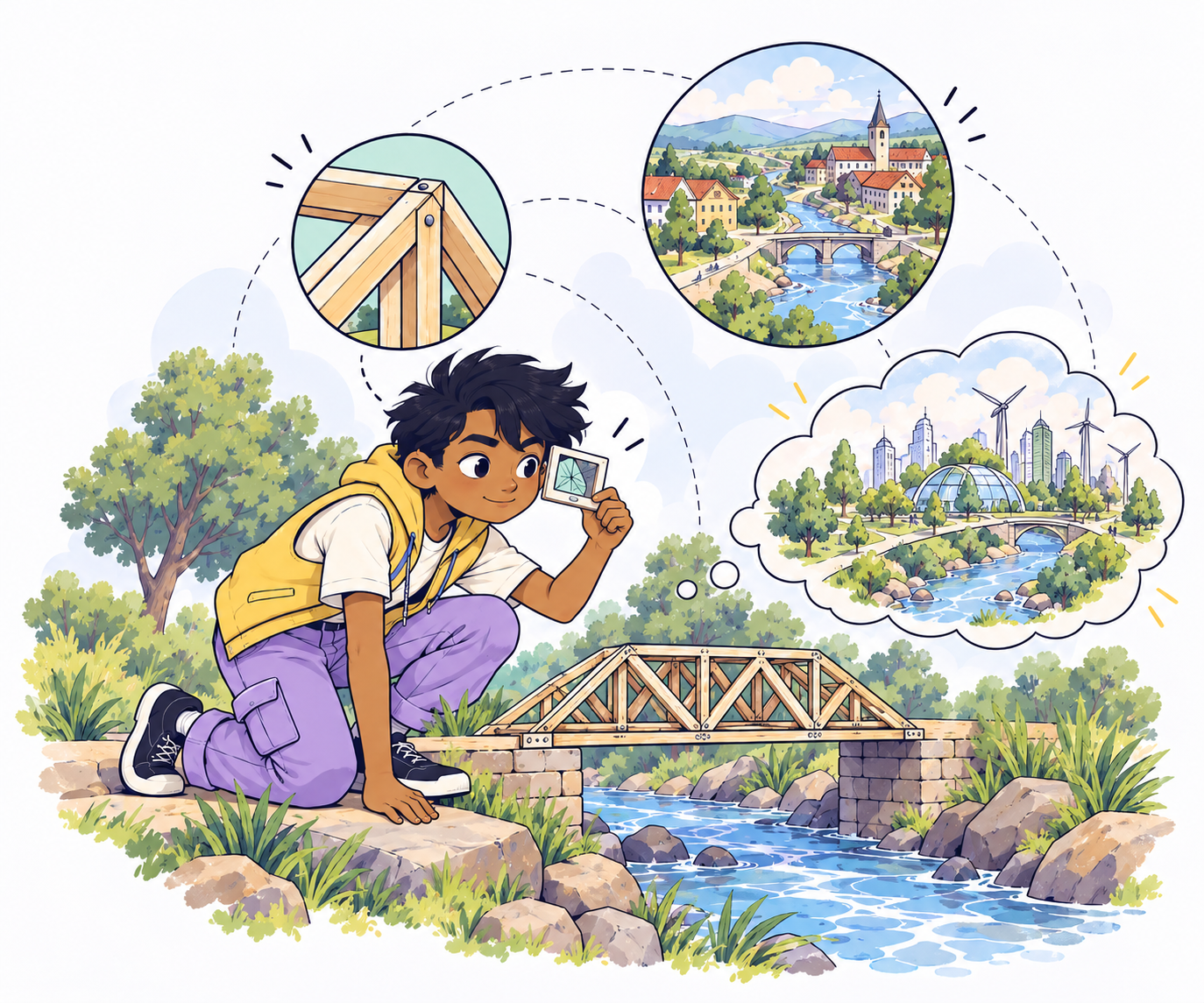 Zoom in Zoom out What if?
Three ways to learn · 01 / Remember
Learning in
the age of AI.
First, make it stick. Facts, words and ideas give us something to think with.
Bring an idea back. Explain it in your own words. Build knowledge you can use.
A foundation for every curious mind.
“What do I know?”
Take it in. Connect it. Recall it.
Three ways to learn · 02 / Apply
Learning in
the age of AI.
Now, put it to work. An idea becomes more useful when you can try it somewhere new.
Make a model. Solve a problem. Explain why your approach works.
Knowing something. Doing something with it.
“Where could I use this?”
You know a triangle.
Could it help a wobbly frame?
Try it. Test it. Explain what happened.
The future we’re building
AI beside you.
Your curiosity
in charge.
A question can take you somewhere your lesson never planned to go.
We want AI to help children follow that curiosity: another explanation, a fresh example, a different perspective. Keep asking. Keep checking. Make the thinking your own.
Try changing your perspectiveOur direction for AI-supported learning. The example here is authored, so you can explore it without an AI account.
“What else could
this idea become?”
- Go deeper.Detail
“Show me why that happens.”
- Go wider.Perspective
“Who else might see it differently?”
- Imagine.Possibility
“What could we try that’s different?”
Ask for help. Check the answer. Decide what you think.
One idea. Three distances.
A small detail.
A much bigger
question.
Start with a bridge. Move closer to its structure, or further out to the lives around it.
Same idea. New questions. This is the kind of exploration we want every child to be able to follow.
Find a place to startA prepared example to explore. No live AI call or saved response.
What keeps the frame from changing shape?
The brace divides the rectangle into triangles. Make a hinged model with straws and compare it before and after adding a brace.
How would you cross this river?
Sketch a crossing. Think about the gap, the materials and who will use it. What would you test before trusting your design?
A bridge for whom?
A shorter school journey? Access for a wheelchair? Space for wildlife? Change the point of view and your design might change too.
Start here · 01 / Critical thinking
The answer
isn’t the end.
It’s a clue.
A convincing claim. A surprising picture. An answer from AI. What would make you trust it?
Make a first call. Inspect the evidence. Compare explanations. Say what changed your mind.
Explore Critical Thinking20 investigations · Ages 10–12 with a caregiver
Three reports.
Three pieces of evidence?
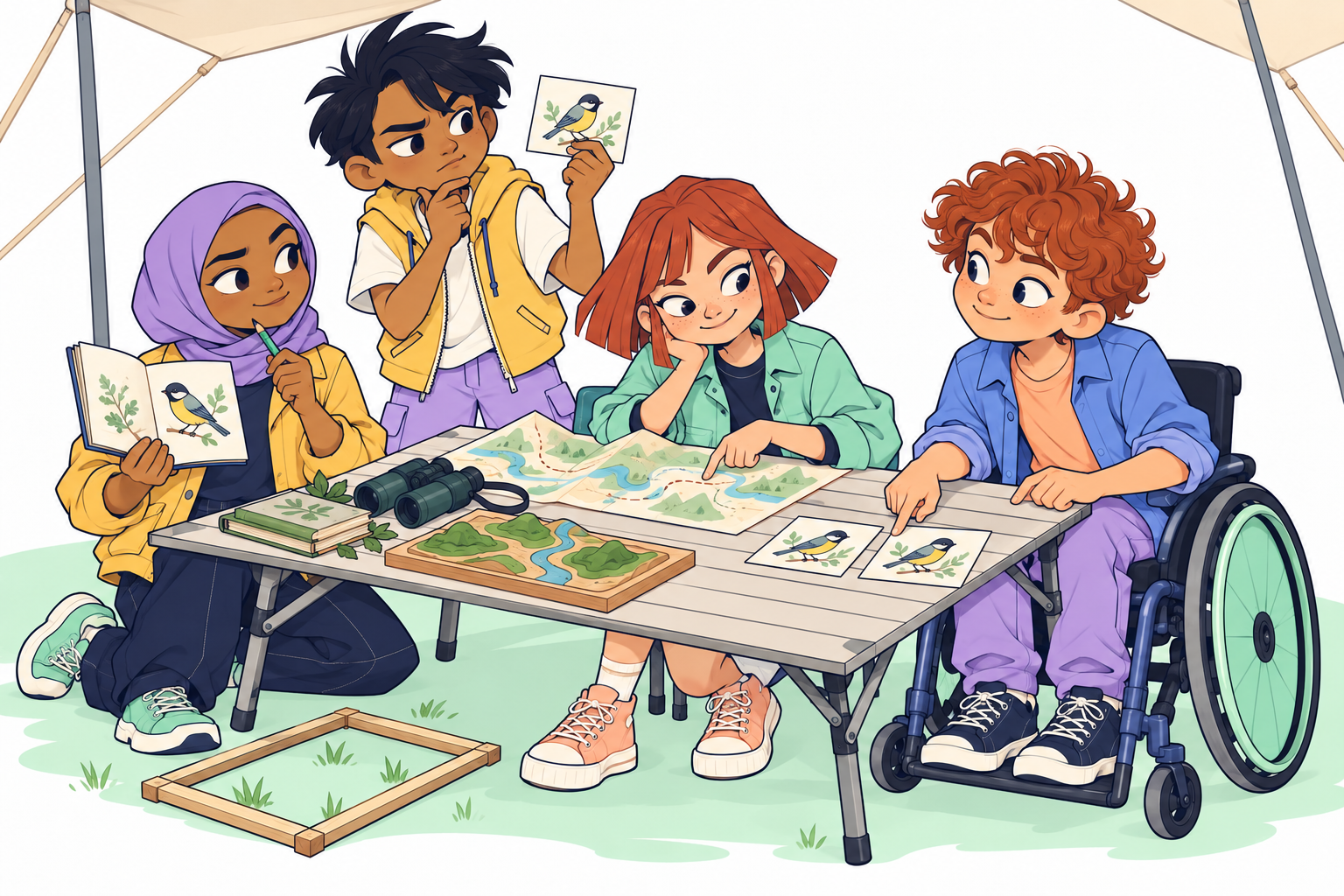
First question:
Did they all copy the same source?
Start here · 02 / Assessments
School subjects.
Fresh ways
to see them.
Make an idea something you can see, explain and try.
Maths, science, history, geography and more. See the idea, try it independently and find your next step.
Explore AssessmentsYear 7 autumn · 12 written subjects + 7 practical trackers
A wider KS2 and KS4 offering is planned.
Learn the idea. Try it. Understand your next step.
Start here · 03 / 11+ Studio
Prepare for
the exam.
Keep the wonder.
Numbers to build. Stories to enter. Patterns to turn around in your mind.
Maths, English, verbal and non-verbal reasoning. Make room for understanding as you work towards something important.
Enter 11+ Studio54 learning visits across 18 weeks
Starting checks sample topics. They do not predict exam readiness.
Four subjects. Many ways in.
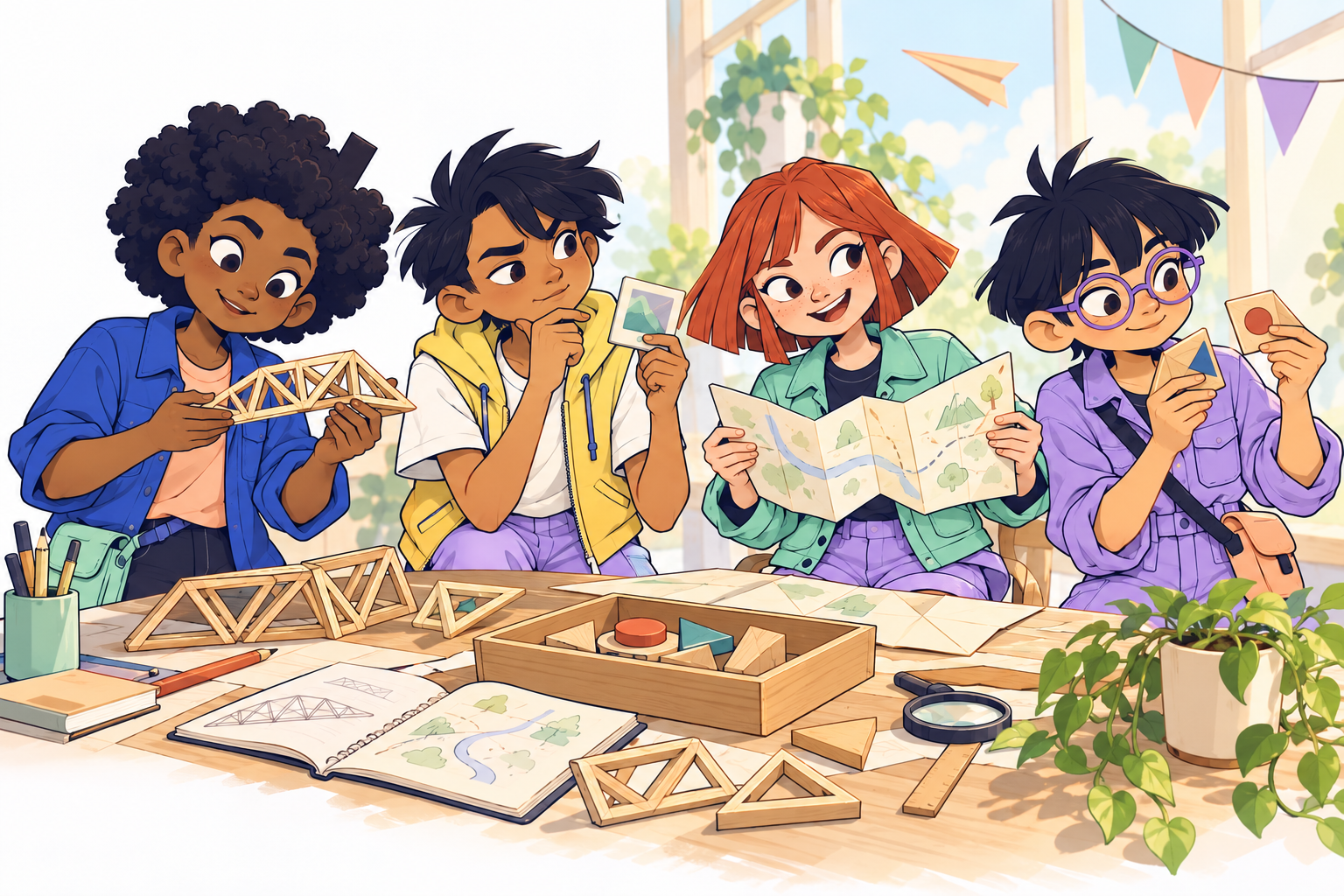
Find the idea beneath the answer.
Your Club · Your people
A mind of
your own.
People in
your corner.
A useful question from someone who cares can open up a whole new way to think.
Connect with parents, caregivers, teachers or tutors. Your connected adults can see saved work and offer feedback. You can work independently, too.
Find your place in the ClubOnline sessions with a group of friends are part of our future plans.
Every mind brings a different view.
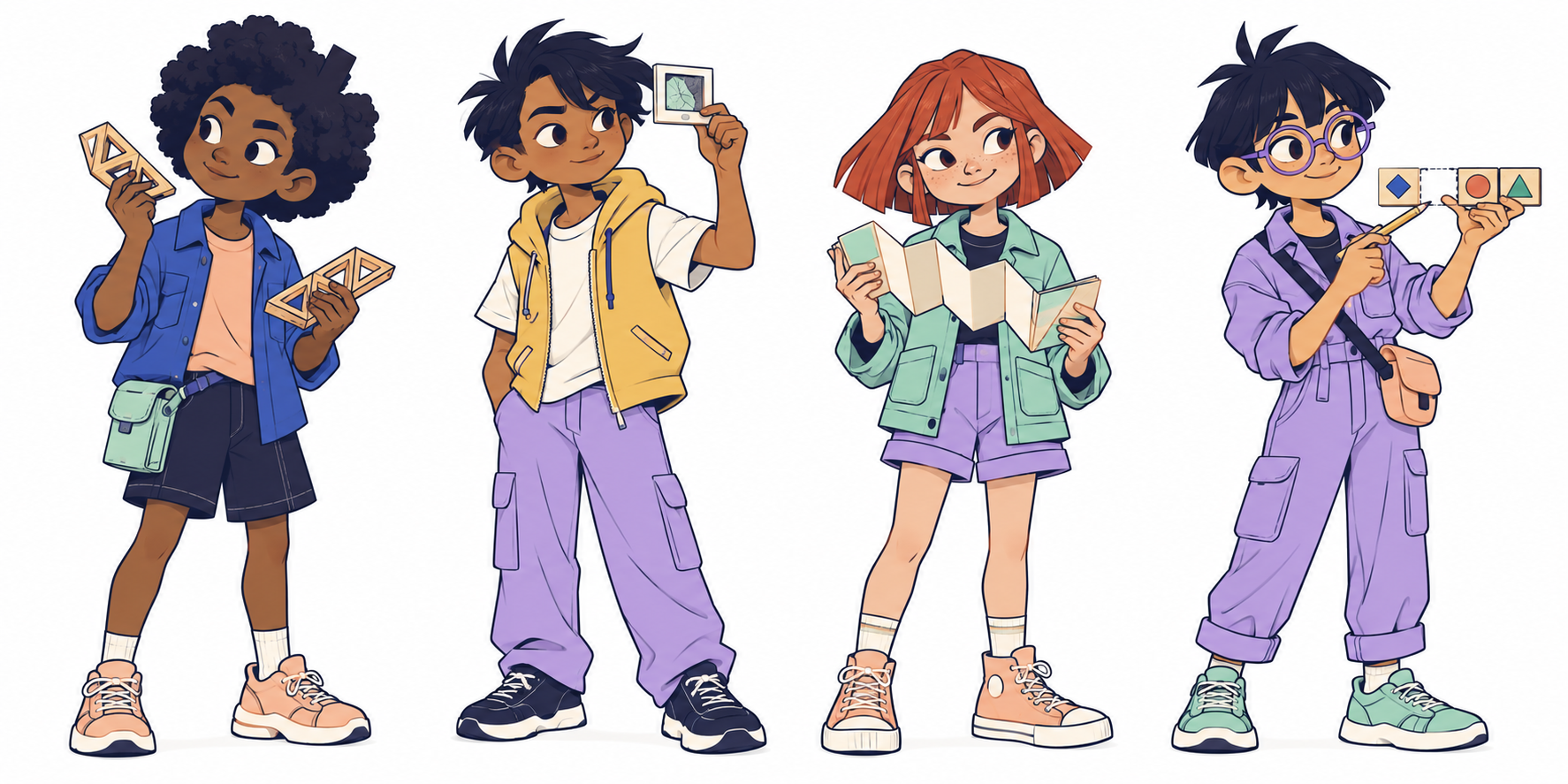
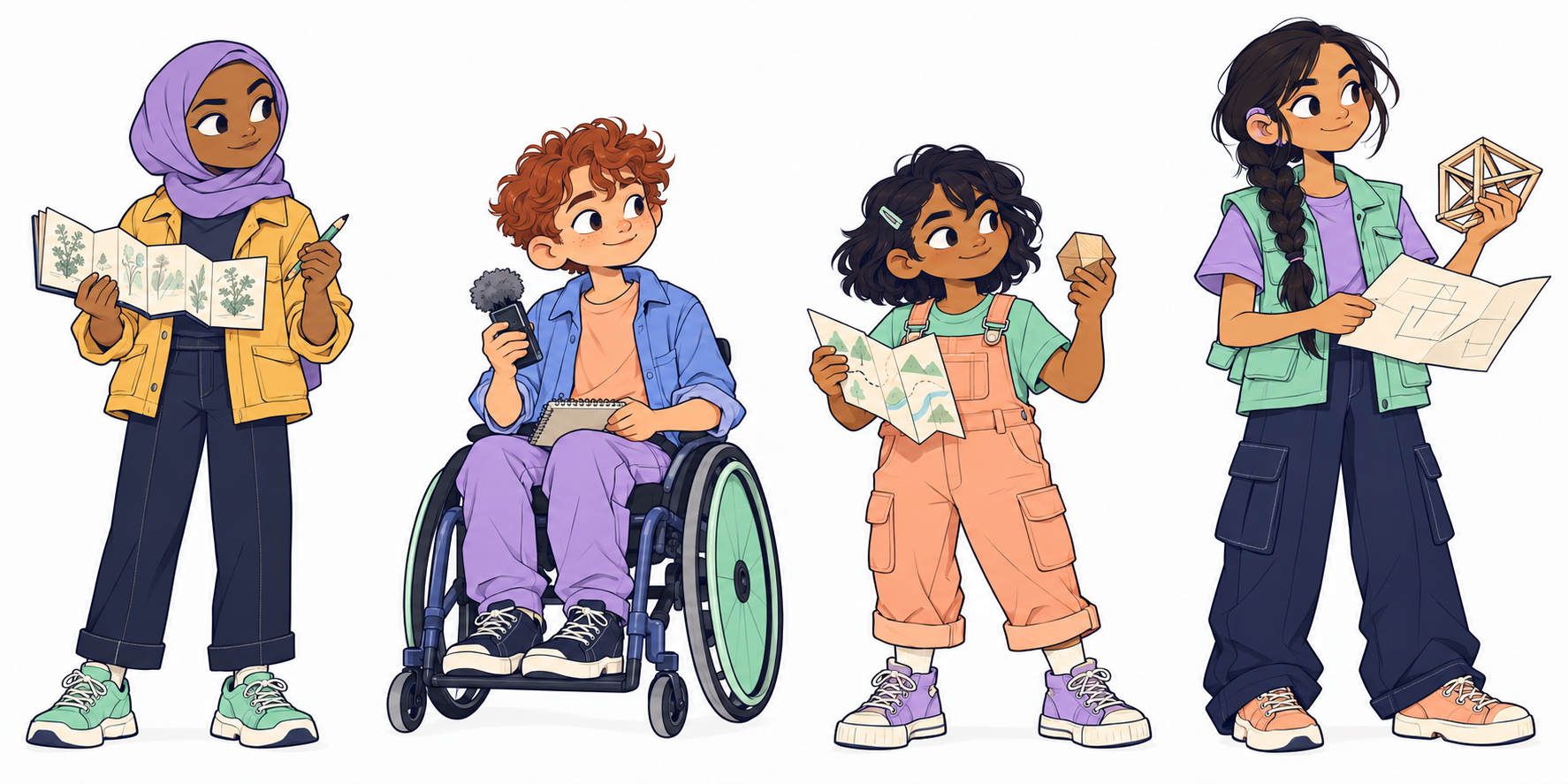
Our story crew. A world of different perspectives.
One account. Three places to begin.
Bring a question.
See where
it takes you.
Join as a student or an adult. Start with the learning that matters to you today.
No separate AI account is needed for the prepared activities.
- 01
Make yourself at home.
Create an account, then choose Student or Adult.
- 02
Connect your people.
Send an email connection request. Access begins after acceptance and any required caregiver approval.
- 03
Find your next question.
Choose a subject, return to your work and keep moving your thinking forward.
For children who wonder.
And the grown-ups who wonder with them.